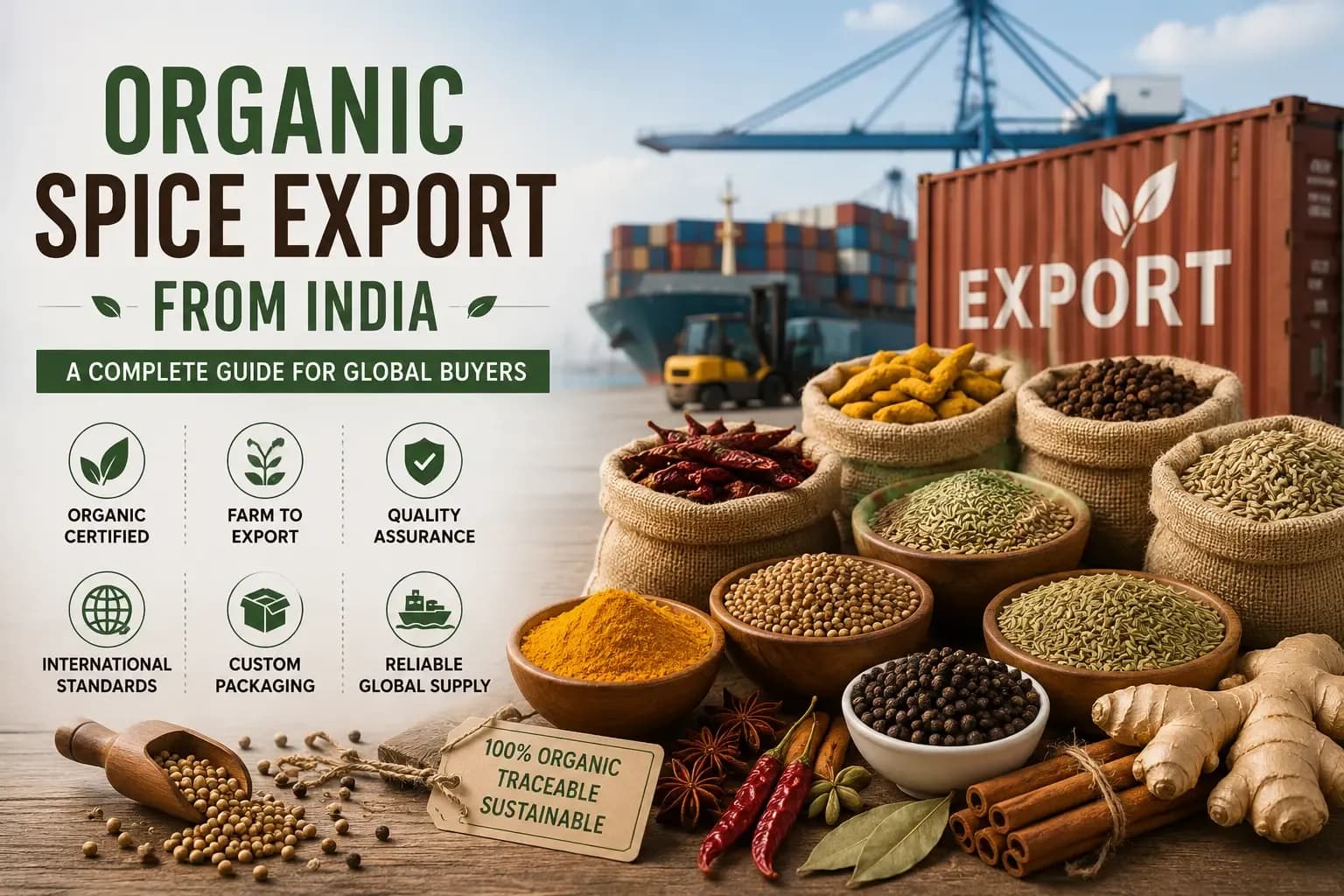
Organic Spice Export from India: A Complete Guide for Global Buyers
India is one of the world's leading spice-producing countries, with a diverse range of spices and herbs grown across different agricultural regions. From turmeric and cumin to coriander, ginger, black pepper, fenugreek, and other herbs, Indian spices are used by food manufacturers, retailers, restaurants, and consumers across international markets.
For businesses looking to source organic spices from India, choosing the right supply partner is an important decision. Quality, certification, traceability, processing capabilities, documentation, packaging, and supply consistency all play a role in building a reliable international supply chain.
1. Why Source Organic Spices from India?
India offers a wide variety of agricultural products and has an established spice-processing and export ecosystem.
Some key advantages for international buyers include:
- Wide variety of spices and herbs
- Diverse growing regions
- Established agricultural supply chains
- Experience in spice processing and packaging
- Availability of bulk and retail formats
- Private-label sourcing opportunities
- Export-oriented supply capabilities
The right supplier can help buyers connect agricultural sourcing with processing, quality control, packaging, and international delivery.
2. Choose the Right Organic Spice Supplier
Selecting a supplier should go beyond comparing quotations.
Before starting a long-term relationship, buyers should evaluate:
- Organic certification relevant to the target market
- Product specifications
- Farm and sourcing network
- Traceability systems
- Processing facilities
- Quality-control procedures
- Laboratory testing
- Production capacity
- Packaging options
- Export experience
- Documentation capabilities
A supplier that can manage multiple stages of the supply chain can make procurement simpler and more transparent.
3. Verify Organic Certification
Certification is a critical consideration when purchasing organic products.
International buyers should request and verify the supplier's current certification documents and confirm that the certification covers the relevant products and activities.
Depending on the destination market, buyers may need specific organic standards or documentation. Requirements can differ between markets, so exporters and importers should confirm the applicable regulations before placing an order.
4. Understand Farm-to-Export Traceability
Traceability helps buyers understand where their products originate and how they move through the supply chain.
A well-managed supply chain can follow a journey such as:
Farm → Collection → Processing → Quality Control → Packaging → Shipment → Buyer
For organized farmer networks, an Internal Control System (ICS) can support farm-level records, inspections, farmer coordination, and traceability within an organic production system.
This level of visibility can be particularly valuable for international buyers who need greater confidence in sourcing and documentation.
5. Quality Control from Farm to Processing
Spice quality starts with responsible agricultural practices but continues throughout processing and storage.
Depending on the product, quality-control processes may include:
- Raw-material inspection
- Cleaning and sorting
- Grading
- Moisture assessment
- Foreign-material control
- Microbiological testing
- Product-specific laboratory analysis
- Batch identification
- Controlled storage
- Packaging inspection
Ground spices may require additional attention because processing can influence particle size, colour, aroma, and other product specifications.
6. Choose the Right Product Format
Organic spices can be sourced in different formats depending on the buyer's application.
Whole Spices
Suitable for:
- Food manufacturers
- Spice processors
- Restaurants
- Retail brands
- Further processing
Examples include whole cumin, coriander seeds, black pepper, cardamom, and fenugreek.
Ground Spices
Ground spices can be supplied for direct use in food manufacturing, retail products, restaurants, and foodservice applications.
Examples include:
- Turmeric powder
- Cumin powder
- Coriander powder
- Ginger powder
- Black pepper powder
Custom and Private Label
Businesses developing their own brands can also explore private-label sourcing, where the supplier supports product preparation and packaging according to agreed specifications.
7. Packaging for International Markets
Packaging requirements depend on the product, quantity, destination, transportation conditions, and buyer's requirements.
Possible formats include:
- Bulk food-grade bags
- Sacks
- Cartons
- Retail-ready packs
- Private-label packaging
- Custom packaging
International buyers should confirm packaging specifications before production, including pack size, material, labelling requirements, palletisation, and shipping conditions.
8. Export Documentation
International spice shipments require appropriate commercial and regulatory documentation.
Depending on the destination market and product, documentation may include:
- Commercial invoice
- Packing list
- Certificate of origin
- Product specifications
- Certificate of analysis
- Organic documentation
- Phytosanitary documentation where applicable
- Shipping documents
- Other destination-specific compliance documents
Import requirements vary by country, so buyers should work with their importer, customs representative, and supplier to confirm the documents required for each shipment.
9. Request Samples Before Bulk Orders
Product samples allow buyers to evaluate whether the supplier can meet their specifications before committing to larger volumes.
Sample evaluation may cover:
- Appearance
- Aroma
- Colour
- Taste
- Particle size
- Moisture
- Cleanliness
- Packaging
- Laboratory parameters
For larger commercial programs, buyers may also arrange independent testing or inspection according to their procurement requirements.
10. Consider Supply Capacity and Consistency
A supplier may provide an excellent sample but still need to demonstrate that they can maintain consistency at commercial volumes.
Ask about:
- Annual production capacity
- Seasonal availability
- Minimum order quantities
- Production lead times
- Stock availability
- Forecasting requirements
- Batch consistency
- Shipment schedules
For businesses importing regularly, forecasting demand in advance can help suppliers plan sourcing and production.
11. Private Label Organic Spices
Private-label sourcing allows businesses to create products under their own brand while working with an experienced manufacturing or export partner.
A typical private-label process can include:
Product Selection → Sourcing → Processing → Quality Control → Packaging → Labelling → Export
Before selecting a private-label partner, confirm:
- Product range
- Organic certification
- Minimum order quantity
- Packaging capabilities
- Label requirements
- Product specifications
- Testing requirements
- Production timeline
- Export capabilities
12. How to Compare Organic Spice Exporters
When comparing suppliers, consider the complete value proposition rather than focusing only on price.
FactorWhat Buyers Should Evaluate
Certification
Valid and relevant certification
Traceability
Visibility from farm to finished product
Quality
Specifications and testing
Processing
Cleaning, grading and processing capabilities
Capacity
Ability to fulfil required volumes
Packaging
Bulk, retail or private-label options
Documentation
Export and compliance support
Lead Time
Production and shipment schedules
Communication
Transparency and responsiveness
Consistency
Reliable quality between batches
A reliable supplier should be able to provide clear information about its products, sourcing practices, quality systems, and export processes.
13. Building a Long-Term Supply Partnership
Successful international sourcing is often based on long-term collaboration.
Regular communication between buyers and suppliers can help with:
- Demand forecasting
- Crop planning
- Product specifications
- Quality expectations
- Packaging requirements
- Production schedules
- Shipment planning
A long-term relationship can also help both parties understand changing market requirements and improve supply-chain efficiency.
14. Questions to Ask an Organic Spice Exporter
Before placing an order, international buyers should consider asking:
- Where are the spices sourced from?
- What organic certification does the supplier hold?
- Can the supplier provide traceability information?
- What quality-control procedures are followed?
- Are product samples available?
- What laboratory testing is performed?
- What are the minimum order quantities?
- What packaging options are available?
- Can the supplier support private-label requirements?
- What export documentation can be provided?
- What are the production lead times?
- Which international markets does the supplier serve?
Conclusion
Sourcing organic spices from India can provide international buyers with access to a diverse range of agricultural products and established spice-processing capabilities. However, successful sourcing depends on choosing a partner that can provide more than a product and a price.
Certification, traceability, quality control, processing, packaging, documentation, supply capacity, and communication should all be considered when selecting an organic spice exporter.
A strong farm-to-export supply chain can help businesses build more reliable sourcing programs and develop long-term international partnerships.
Source Organic Spices from India with RK Group
RK Group connects agricultural sourcing with processing, quality management, traceability, and export-focused supply solutions.
For businesses looking for organic spices, herbs, bulk products, or private-label sourcing from India, RK Group can work with buyers to understand product specifications, volumes, packaging requirements, and destination-market needs.
Looking for an organic spice export partner in India?
Contact RK Group to discuss your sourcing requirements and build a reliable supply partnership.